 D. Bohica
How to Write LitRPG Fight Scenes: Rules From an Army Veteran
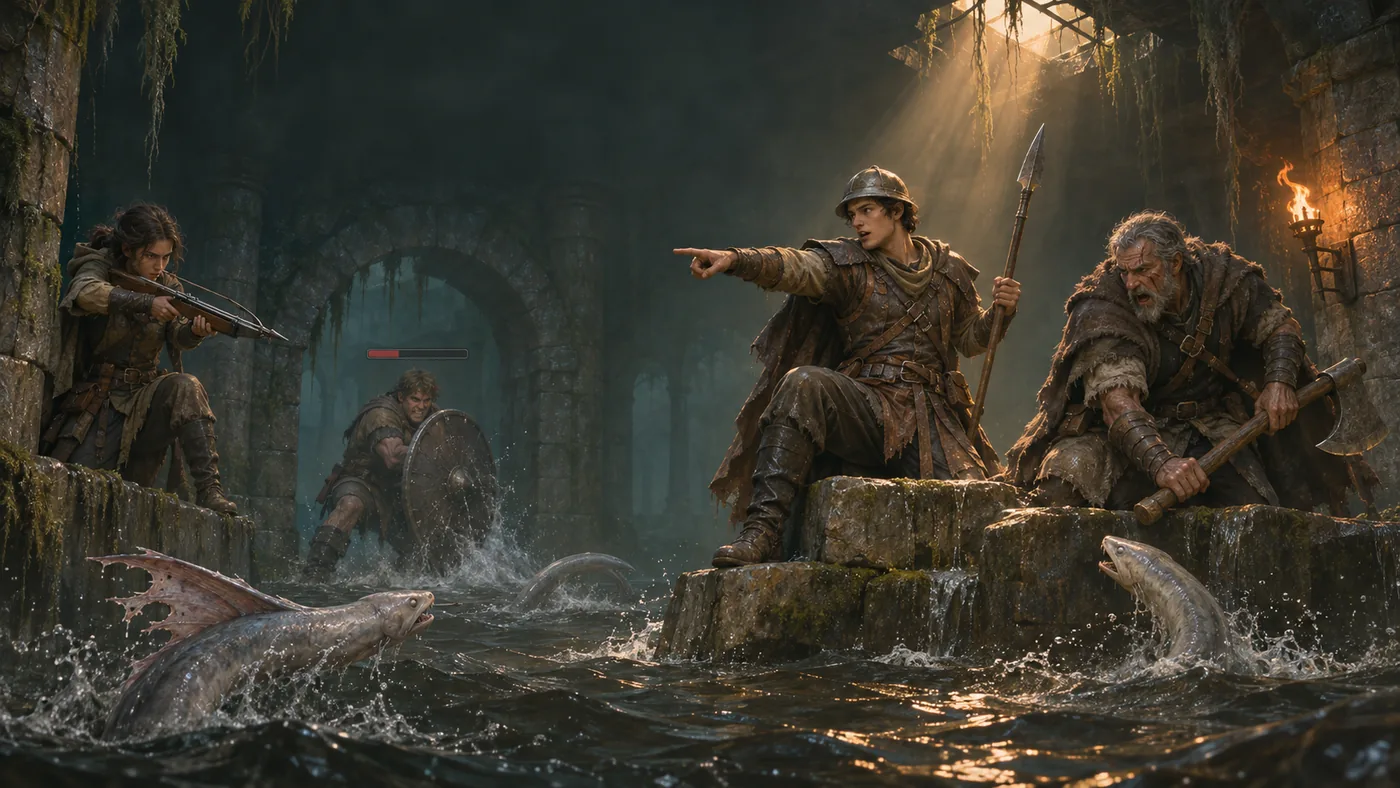
BLUF: settle the fight before the first blow, let the reader draw it on a napkin, make every hit change something, and give your party one voice calling it. Keep the numbers and the boxes out until the fighting stops.
This one is for LitRPG and progression fantasy authors first. It also works for anyone else who writes action: fantasy and thriller writers, game masters who narrate fights at the table, and readers who want to know why some fights pull them in and others make them skim.
Fights are where LitRPG readers decide whether to keep tapping. A good one is the reason they bought the book. A slow one is where they start skimming, and a reader who skims a fight starts skimming everything after it.
I was an Army combat medic and later an engineer officer, and I write BIFROST: Drop Zone on Royal Road. My early drafts kept failing in two ways. Some fights read like a choreography sheet: he swung, it ducked, he spun. Others read like a spreadsheet: damage numbers, pop-up boxes, a health bar ticking down. Neither one puts the reader in the mud. So I built a rulebook for combat, and these are the rules I write to now. Sections 7 and 8 are new this month, built for party fights.
What LitRPG readers keep telling authors
Before the rules, here is what the genre's readers and reviewers say goes wrong in fights. Every rule below answers one of these.
- Stat boxes teach skimming. LitRPG Reads warns that bloated stat presentation trains readers to skim, and that a chapter's emotional peak broken up by a stack of notifications is a warning sign. Their rule of thumb: let the reader experience the fight, not audit it.
- Show only what the reader needs to track right now. The same piece says the problem in a dense fight is how many conditions the reader has to hold, not the math itself, and that consequences should carry the climax, not formulas.
- The mechanics have to matter, and so do the stakes. A NINC genre spotlight says decorative stats don't count, and that readers increasingly want real stakes: permanent injury, consequences that stick, choices that cost.
- An overpowered hero kills tension. Readers on Goodreads name fights where the hero's life is never really on the line among the genre's worst habits.
- Don't report a change the reader can't picture. A reader on r/litrpg put it plainly to an author asking for advice: skip the level-up bonus that adds 3% to fire attacks.
1. Write the beats, not every frame
Your readers have watched a thousand fights. They will fill in the motion between your key moments without help. Paint the moments that decide the fight and trust the reader with the rest.
In the violence, keep sentences short: ten to twelve words, subject, verb, object. Use a fragment when the break earns it. Let the aftermath run longer. Real fights last seconds, and the prose should move that fast.
If you catch yourself writing a list of strikes, stop and ask which one changed something. Keep that one.
I learned a lot of this by studying real fights frame by frame. That story is in How MMA Taught Me to Write Gladiator Fights That Actually Hit.
2. Settle five things before the first blow
Each of these takes a line or two on the page. Together they run maybe a hundred words, and they make every blow after them mean something.
- The point of the fight. What each side wants and what losing costs. The reader knows both before the first blow and gets reminded once in the middle. A fight that changes nothing gets cut or made smaller.
- How the enemy fights. Show the method before it lands on anyone: a carcass that was rolled under, claw marks on a shield, a line from someone who survived it. You want the reader to dread the move when it comes. Surprise is cheaper than dread.
- What your hero has going in. A short count: bolts, charges, potions left, mana as a feeling (fresh, tired, empty), and who is already hurt. The fight subtracts from this count, so the reader needs to see it first.
- The team. Who gives the orders, each person's job, the calls and hand signals, and the lanes that keep one ally out of another's line of fire. Allies act on their own judgment inside their job. They are people, not furniture.
- Who is watching. If your hero is hiding something (a class, a level, a past), decide before the fight what each witness gets to see. If the fight forces him past that line, that is a beat, and it costs him later.
3. Let the reader draw the fight
If a reader can't sketch your fight on a napkin, they are confused, and confused readers skim. Six rules fix most of it.
- Set the ground before contact. One short, plain passage names two or three landmarks and puts every fighter on the ground by them. A landmark is a fixed thing your hero can see: the bell, the footing, the dead cypress. This passage is for placement. Save the mood for somewhere else.
- Landmarks keep their names. Once it is "the dead cypress," it never becomes "the old tree." A new name reads as a new place.
- Pick one direction frame and hold it. Either your hero's left and right as he faces the threat, or the compass. Never both in one fight. Give distances in paces.
- Re-fix at every turn. A turn is any change the reader has to redraw the picture for: a line breaks, someone goes down, the enemy shifts. Spend one line re-placing whoever moved, using the same landmarks.
- Count the enemy. Give the number at the start and again at each turn.
- No ally vanishes. Every ally gets seen or heard at least once between turns, even in half a line. If your hero can't see them, place them by sound.
Give each monster that matters a body tell. When several of the same creature are in the fight, each one that hurts someone, gets hurt, or has to be found again gets one physical mark the first time your hero sees it: a torn ear, a milk-white eye, a split scale. That mark is its name until it dies. Make the tell fit the creature (a skeleton has no scar, but it can have a cracked brow), give no two the same tell, and never rename one. "The white-eyed one" does not become "the big one" two paragraphs later.
4. Every hit says four things
Every blow that lands, on either side, tells the reader who struck, with what, where on the body, and what it changed.
- Weak: Ash was hit.
- Strong: The torn-ear wolf got its teeth into Ash's calf, and the leg went out from under him.
The second line has all four. The first has one.
- Cause before effect. The reader sees the swing, then the wound.
- One action to a sentence while the violence is running.
- A miss or a block earns a line only when it changes something: a position, a weapon, how tired someone is.
Always name what your hero is fighting with. Name it at the start, and name it again every time it changes. Spear to knife is a change. A skill switching on or off is a change. Skill names on the page are fine. Pop-up boxes are not: no box interrupts a fight. Save the ding for the breath after.
When a skill costs something, show the cost in the same beat, as a feeling and never a number. He feels the pool run low. He does not see "Mana: 14/80."
If you write crunchy: your readers may want the numbers, and that's fine. Show the ones that change what the reader fears right now (a health bar near empty, a cooldown on the one skill that can save him), and put them between exchanges, never inside one. Everything else can wait for the breath after the fight.
Respect time and reach. A crossbow reload takes breaths and both hands. Ten paces of mud are not crossed in one sentence. A spear outreaches a sword, a sword outreaches a knife, and jaws get inside all of them.
5. Wounds are debts
No hit points on the page. Nobody says "HP," and no damage number appears in the narration. I track wounds on a ladder in my notes, and the level's name never reaches the prose.
| Level | At impact | What the body does |
|---|---|---|
| Minor | A slap, a scrape, a hiss of breath. | A flinch, maybe a curse. No step lost. |
| Moderate | Felt through the whole body. A grunt forced out. | Gives up a step, guards that side, keeps fighting differently. |
| Serious | The blow moves the body or opens it. Something is plainly wrong. | A part quits: the weapon drops, the knee folds. Often the fighter tries to use it anyway, and it fails. |
| Severe | For an instant the loudest thing there is. Then quiet. | Down, and not getting up. The colour is gone. |
How to use it:
- Blow, impact, body. Show the hit in that order. What the wound took away, the reader learns later, by watching the fighter fail at something.
- One impact detail and one body action per hit. Pick the strongest. Five details is a medical report, and I have written enough of the real ones.
- On your point-of-view character, pressure comes before pain. A punch, heat, wet. The pain arrives late. In the heat of it, people fight through wounds they don't feel yet. The pain and the shaking come when it stops.
- Name the hurt plainly. Use the word pain, with concrete verbs. Skip the soft stand-ins like "the pain reached him."
- A wound stays taken until something gives it back. A serious cut to the sword arm does not swing two paragraphs later.
- Blood loss is its own clock. An unstopped bleed gets worse, and effort makes it faster. Dirty water festers a wound that wasn't cleaned, so show your characters cleaning them.
- Weight without wallowing. A death gets one clean, honest line. The aftermath carries the rest.
Tired is a second clock. It runs beside the wound track: winded, then heavy limbs and wandering aim, then shaking hands and orders heard late, then a fighter who can't keep a guard up. Sprints, holding a shield, armour, heat, fear, no sleep, blood loss and spending magic past empty all push it up. A fighter works at the worse of the two tracks, and when both are moderate or higher, one step worse than that. That is how a long fight with no bad wound still grinds a party down.
Fear changes the senses. Under real danger, sight closes down to the threat. Sound drops out, so an ally's shout may not land. Time stretches or skips. Fine work fails first: a buckle, a bolt on the string, a knot. Afterward come shaking hands, a dry mouth, sickness, and people who can't stop talking or can't start. I've been there, and this part I didn't have to research.
Use it as a measuring stick. Veterans narrow less and recover faster. First-timers get the full weight. Showing it on the green kid is how the reader measures how calm your hero is.
This section covers the hit itself. For what happens after it (bleeding on a clock, tourniquets, triage, shock), see my earlier post, Writing Combat Wounds in LitRPG: Notes From a Retired Army Medic.
6. Not every monster fights to the death
Decide what kind of enemy it is before you draft. It changes how the fight ends.
| Kind | When it gets hurt | Exceptions |
|---|---|---|
| Wild animal | Prey runs at the first hurt. A predator breaks off at a serious wound: it wants a meal, not a fight. | It fights on when cornered, guarding young, starving, or driven by something worse behind it. |
| Dungeon-made | No change. It fights until it is dead. | It is still a body. A broken leg stops a charge even when it can't stop the will. |
| Thinking (people, smart monsters) | Weighs it, then chooses: fight, yield, bargain, feint or run. | Paid men break when the leader falls or half are down. Men guarding their own hold past both. |
The enemy shows its wounds the same way your heroes do. It favours a leg, it bleeds from the neck, its charge comes slower. A creature that takes three wounds and moves exactly as before is a mistake, unless it was built not to care.
Something has to go wrong. In every fight, the plan fails once or the enemy wins a round: a misread, a tool that breaks, a call nobody heard, an animal that does what its kind shouldn't. This matters most once your hero levels past the easy stuff. When he's stronger than what he meets, this rule carries the tension his weakness used to carry.
7. New: party comms for a LitRPG dungeon party
These rules came out of putting my hero in a dungeon party for the first time. Four people in a fight, all talking, turns into noise on the page unless the talk has a structure. So I borrowed one from the Army.
Two voices meet. The veteran adventurer talks like the raider he was: rough, short, a party man's words. The ex-soldier talks like an operations officer running a fight. The clash is flavour. The team makes it work.
The briefing comes first. Out of contact, the party leader runs things: the route, the camps, the doors. Right before a fight he gives two facts: what winning looks like, and the one move that kills you. That second fact also pays rule 2 from section 2, because now the reader dreads the move. Then the tactical lead turns it into a plan: each job by first name, the direction frame, the calls he'll make. Two to four lines on the page.
One caller once it starts. When the fight begins, one person calls it. Everyone else speaks only in their own lane:
- The veteran calls the enemy's tells: what it is about to do.
- Anyone calls their own state, short: hurt, out of bolts, one potion left, can't hold.
- The healer calls who he's working on and how many potions are left.
Every call gets a read-back. One word. A call nobody reads back is a call nobody heard.
A good call says what is happening, who it falls on and what to do, a beat before it's needed, placed by the landmarks.
Calls thin out as things get worse. The caller ranks them by urgency. When the fight goes bad, he drops the calls that only inform and keeps the ones that keep people alive. The reader feels the stakes rise as the talk gets shorter.
First names, no cute shorthand. The party coins no nicknames for monsters or moves. The body tell still names a creature. Real terms stay unexplained.
How many calls to quote. In the first fight of a new area, a boss or a peak fight, quote most of them and keep the narration lean around them. In later fights of the same kind, quote one or two and tell the rest.
What it looks like
The briefing:
Jory spat into the black water. "Drowners. They grab an ankle and hold you under till you quit. Stay off the low stones and you go home."
"Pell, the ledge on the left, bow. Ash, shield in the arch. Jory, high stones with me. Left and right are mine, facing the pool. I call it."
In contact:
"Ash, two at the arch. Brace."
"Bracing."
"Pell, torn fin, left, ten paces. Take it."
"Shooting." The bolt went in behind its eye, and it rolled.
"Big one's going under," Jory said. "It'll come up at the stones."
Later, when it goes bad:
"Ash, back."
Nothing. The water was loud in the arch.
Four ways comms break
Any of these can be the one thing that goes wrong in a fight:
- Crosstalk. The veteran's chatter steps on a call at the worst moment.
- The caller's tax. Running the fight costs the caller his own fighting: a late block, a missed shot.
- Tired comms. Fatigue shows as late calls, clipped words or a missed read-back.
- The silent miss. A call nobody read back, so nobody heard it.
8. New: the after-action, and the reckoning
The reckoning comes first, every time. When the fight ends, before the scene moves on, give a short count: who is hurt and how badly, who is spent, what got used up. During the fight, close each exchange with one line of what it cost: a wound, a bolt count, a potion gone. LitRPG readers love inventory, and this is where they get it.
The after-action is earned. It goes on the page only after a wound, a near-loss or a broken call. A clean fight gets the reckoning and nothing more.
When it runs, the caller leads it, short: what happened, one fix for next time, no blame. Two to four lines, and every line does something: asks, refuses, offers, raises the price. It is never a retelling of the fight. Nobody on the page calls it an after-action. It's just talk. It can also open the next chapter, which puts the reader straight back into the stakes.
"Ash didn't hear me at the arch."
"Water's louder than you in there," Jory said.
"Then I call it twice. Ash, you answer, or I come get you."
Ash rubbed his calf. "I'll answer."
The LitRPG fight scene checklist
Before I call a fight chapter done, I run this:
- The point, the enemy's method, the count, the team and the witnesses are settled before the first blow
- Two or three landmarks with fixed names, and one direction frame
- The enemy is counted at each turn, and no ally vanishes
- Every landed hit says who, with what, where and what it changed
- The hero's weapon or skill is named at every change
- No numbers and no boxes mid-fight
- Every wound stays taken, and every creature shows its wounds
- Something went wrong once
- Every call got a read-back, and the calls thinned as it got worse
- The reckoning closes the fight, and the after-action runs only if it was earned
If you've got a fight scene that isn't landing, drop me a line and I'll tell you which rule it's breaking. BIFROST: Drop Zone is on Royal Road if you want to see these rules at work, and the dungeon chapters coming next are where the party comms rules live.
Sources
- Crunchy vs. Creamy: How Much Math is Too Much in Modern LitRPG?, LitRPG Reads
- Spreadsheets vs. Story: Are Stat Blocks Ruining Modern LitRPG?, LitRPG Reads
- LitRPG: A Genre Spotlight, Novelists, Inc.
- Worst mechanics in a LitRPG series?, Goodreads discussion
- What are your biggest do's and don'ts as readers?, r/litrpg