 D. Bohica
Memory Sacrifice in Fantasy, My Sister's Dementia, and the Combat Memories I Can't Access
Memory Sacrifice in Fantasy, My Sister's Dementia, and the Combat Memories I Can't Access
I posted a discussion about memory loss in fantasy novels while avoiding my manuscript edits, and 47,000 people showed up. Then 23 strangers in the comments taught me what I'd actually written.
The post asked a simple question: why does voluntary memory sacrifice in fantasy hit different than death? When a character dies heroically, we mourn but understand it. When they choose to forget their child's face to save that same child? That's a different kind of horror.
I cited Guy Gavriel Kay's Tigana, where an entire nation's name gets erased. I mentioned Kingdom of Liars, where using magic literally costs you your memories. I posed philosophical questions about the trolley problem made ongoing. About identity erasure versus physical death.
And 47,000 people cared enough to read it. Twenty-three left thoughtful comments connecting the theme to books I'd never considered: Memory Police and its incremental loss, The Good Place and Chidi's choice to forget to save everyone, The Neverending Story and fantasy as addiction. They taught me things about memory and sacrifice and what we're all afraid of losing.
[Content warning: This post discusses PTSD, combat trauma, dementia, and memory loss. Please read with care.]
I thought I was analyzing fantasy tropes.
I'm not.
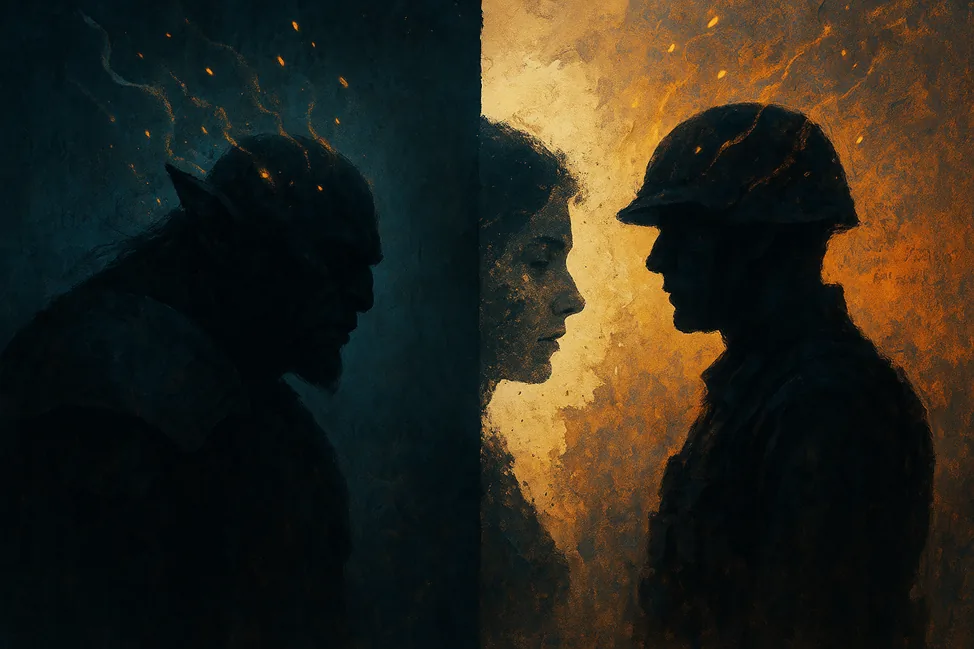
My sister is forgetting. I'm forgetting. The orcs were us.
She's 47. Dementia doesn't wait for you to be old enough to handle it. Last month she cried because she couldn't remember my face when I wasn't in the room. She knows something's wrong. That's the worst part. Watching her watch herself disappear.
Someone in the Reddit thread mentioned Memory Police by Yoko Ogawa. How things vanish from the island every day and people just... forget they existed. The main character loses pieces of her body to forgetting. First an arm. Then her whole body. Then she's just a voice. Then nothing.
That's what I'm watching.
And I'm a veteran with PTSD who can't access specific combat memories no matter how hard I try. There are blank spots. Holes. I know something happened because my body remembers in ways my mind won't. The therapist calls it dissociation. Protective forgetting. My brain made a choice about what I was allowed to keep.
Wait.
In my debut novel Breach of Balance, there's this scene I wrote two years before her diagnosis. The Silver Ear clan. Orc warriors who let parasitic worms eat their most precious memories. Their children's faces. First kisses. The moment they fell in love. In exchange they get enhanced hearing that can detect dragons miles away.
They know what they're trading. They watch the ceremony. They see young warriors scream as memories get consumed. And they choose it anyway because someone has to hear the dragons coming.
The brutal part? They no longer remember WHO they're protecting. Just that they must protect. The chief's wife remembers their love story for both of them now. He can't anymore.
I wrote that.
Before I knew what I was writing about.
The Good Place did this too. Someone in the comments reminded me. Chidi choosing to forget Eleanor to save everyone. Not dying. Forgetting. And she has to live with loving someone who doesn't remember why he made that choice. The person who loved her is gone but the body survives.
Is that better than death?
I don't know. I don't know.
She cries a lot now. My sister. Different than before. She used to cry when she was angry. Now she cries when she can't find the word for "table" or when she realizes she's told me the same story three times in an hour.
The blank spots in my memory don't make me cry. Maybe that's worse. Maybe not feeling the absence is its own kind of loss.
Flowers for Algernon someone mentioned. Watching yourself lose ground in real time. Being aware enough to document your own deterioration. That's what the Silver Ear warriors never have to face. Once the memory is gone, they don't know what they lost.
Is that mercy or horror?
The Reddit comments kept circling back to choice. Voluntary versus involuntary memory loss. Whether choosing to forget makes it more bearable or more devastating.
I didn't choose to forget those combat memories. My brain chose for me. Protection. Survival. Some kind of biological mercy.
She didn't choose this. This is happening TO her. Not FOR her.
But the Silver Ear warriors... they choose. They walk into that ceremony knowing. That's the part that destroys me. The part I wrote without understanding why it mattered.
Because choosing means you understand what you're giving up. You make the calculation. This memory of my daughter's laugh versus the ability to save her from the dragons. This moment of my wife saying "I love you" versus keeping the whole clan alive.
What does it mean when you can't remember making that choice?
The you that decided is gone. The you that remains doesn't understand why you did it. You're protecting someone you can't remember. Fighting for something you've lost the context for.
I keep thinking about what one commenter said about The Neverending Story. Bastian trading memories to stay in Fantastica. Wanting to forget his old life because reality hurt too much. That's different, right? That's escape. Addiction. Using fantasy to avoid dealing with what's real.
But maybe I did that too. Maybe writing about orcs choosing to forget was easier than watching her forget. Easier than sitting with my own blank spaces and wondering what's missing.
Writing gave me distance. I could explore memory loss through fire magic and dragon threats and warrior cultures instead of sitting in the grief of it.
The orcs were us.
She's forgetting. I'm forgetting. We're both losing pieces of ourselves and I wrote about it before I understood what I was processing.
Two years before her diagnosis I wrote that scene. The memory ceremony. The warriors screaming. The chief who can't remember his wife's name but still reaches for her hand in the dark.
I thought it was worldbuilding. Unique magic system. Cost of power. The stuff that makes fantasy feel grounded and real.
It wasn't worldbuilding. It was grief work. Trauma processing. Writing about the thing I couldn't face directly yet.
And 47,000 people responded because they recognized it too. The fear of forgetting. The fear of being forgotten. The fear that you'll lose yourself piece by piece and your body will keep going without you inside it.
That's what fantasy lets us do. We can explore the unbearable by wrapping it in magic and making it about someone else. Orcs instead of sisters. Combat instead of PTSD. Dragons instead of dementia.
Until you look back and realize you weren't writing about orcs at all.
If you've used writing or reading to process what you can't face directly, tell me. What are you working through? What did you think you were writing about before you realized what you were actually writing about?
I thought I was worldbuilding. I was processing grief. I thought I was creating fictional warriors. I was trying to understand my sister and myself and the different ways memory betrays us.
Writing doesn't fix it. The blank spots are still there. She's still forgetting. But maybe that's not the point. Maybe the point is that we don't have to process the unbearable things alone. We can wrap them in fantasy and share them and find out that 47,000 other people are afraid of the same thing.
What are you afraid of forgetting? What have you already forgotten?
Tell me. Please. I need to know I'm not alone in this.