 D. Bohica
I Used My PTSD Flashback to Write This Fantasy Scene
I Used My PTSD Flashback to Write This Fantasy Scene
I Used My PTSD Flashback to Write This Fantasy Scene
The dragon's roar tears through Iandel's sleep like mortar fire.
He jerks awake in the gladiator quarters, hands already reaching for weapons that aren't there. Three heartbeats. Four. His body waits for the whistle of incoming rounds that will never come.
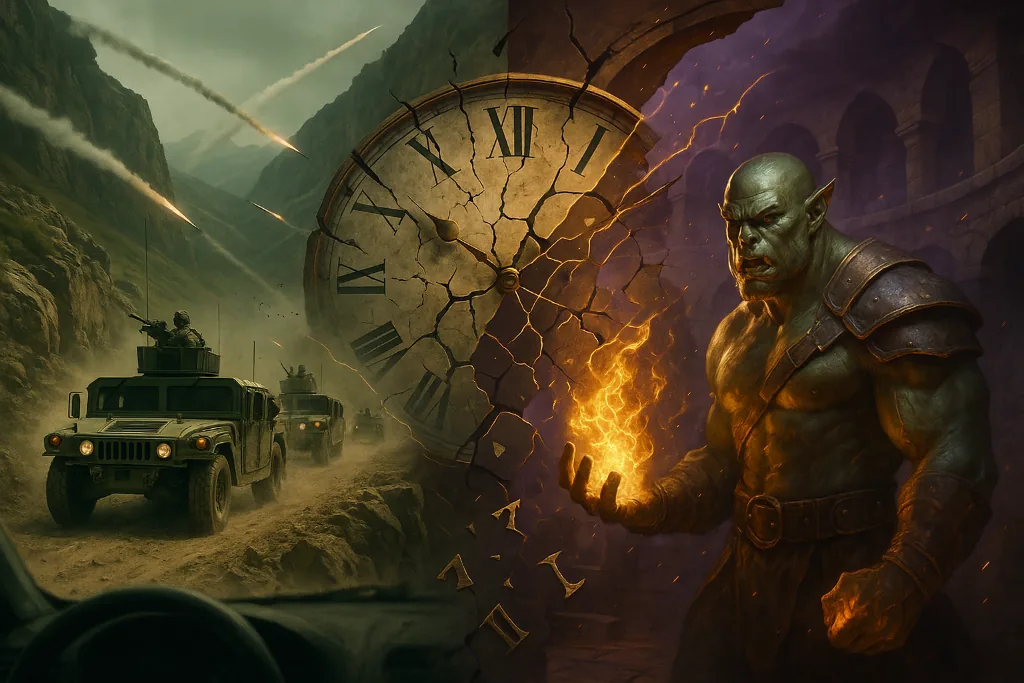
The phantom smell of sulfur and burning flesh floods his nostrils, not from any dragon, but from the fire magic that lives in his bones. The magic that burns him from the inside every time he uses it. The magic that saved his unit and damned his soul.
Time fractures. The stone walls of his cell become the mud-brick compound where his squad made their last stand. The distant sounds of other gladiators become the voices of men who died because he wasn't fast enough, wasn't strong enough, wasn't willing to burn bright enough to save them all.
Iandel tastes copper pennies and feels his chest seize with the familiar weight of command responsibility, the knowledge that every tactical decision ripples through lives under your protection.
This scene came from my own PTSD flashback on I-95 in Baltimore.
❦ ◆ ❦ ◆ ❦
When Real Trauma Becomes Fantasy Gold
I was riding in the backseat of a truck on I-95 through Baltimore when time broke. Lane assist malfunctioned, overcorrecting, and suddenly I was looking face-to-face with death in an oncoming SUV. For one impossible heartbeat, I couldn't remember which vehicle I was in, which war I was fighting, which decade I was living.
The half-second between seeing impact coming and actual safety stretched into the full thirty seconds it took those RPG rounds to arc toward my convoy fifteen years ago. My body was already bracing for cliff stones that wouldn't fall on a highway that had never seen combat.
The smell of turmeric and cumin from a nearby restaurant (the exact combination that meant safety and hot food at the DFAC) triggered something my brain couldn't logic away. Suddenly Baltimore traffic sounds replaced phantom helicopter rotors, and I was tasting the metallic bite at the back of my throat that happens when cordite hangs in still air.
Three weeks later, I used that entire sensory experience to write Iandel's dragon nightmare for Book 3 of my series, "Mantle of Balance." Every detail (from the time distortion to the phantom smells to the involuntary tactical assessment) came directly from my Baltimore flashback.
Real trauma creates better fantasy than anything you can imagine.
❦ ◆ ❦ ◆ ❦
The Mountain Road That Changed Everything
Afghanistan, 2009. I was an engineer officer leading six up-armored Humvees down a road carved into the mountainside like a scar. The blacktop was broken and patched, winding through a valley that should have been beautiful (late spring green, the kind that makes you forget you're in a war zone).
Then the smoke trails appeared. A dozen RPG rounds streaking toward my patrol from the ridgeline above. Time telescoped (thirty seconds of flight time compressed into a crystalline moment where I could taste copper pennies and feel my hands reaching for a radio that would do nothing to stop physics).
My engineer brain calculated blast patterns and debris fields while my body waited for the shower of cliff stones. I remember peripheral movement that my brain interpreted as my wife's silhouette even though she was 7,000 miles away. I remember the metallic bite at the back of my throat when cordite hangs in still air, mixing with dust and the distant smell of turmeric and cumin from base (safety and hot food that felt impossibly far away).
We lived. The RPGs missed or malfunctioned. But that thirty-second eternity carved itself into my nervous system, cataloguing every sensory detail, every involuntary tactical assessment, every split-second when training couldn't overcome the simple human fear of being shredded by high explosives and falling rock.
Fifteen years later, a malfunctioning lane assist system would connect Baltimore asphalt to broken mountain blacktop, and I'd taste phantom cordite while waiting for stones that couldn't fall.
That's how trauma really works—through connections that make no logical sense.
❦ ◆ ❦ ◆ ❦
7 Ways to Write Authentic Fantasy Trauma
1. Lead with Sensory Details, Not Visuals
Most fantasy writers describe what characters see during combat. Real trauma connects through smell, sound, and physical sensations. Your fire-mage doesn't just see their magic (they smell sulfur mixing with sweat, hear the whistle of superheated air, feel burns that never quite heal properly).
When that character encounters similar smells in a tavern kitchen or hears similar sounds during a thunderstorm, their body remembers the cost of power before their mind catches up.
2. Make Connections That Don't Make Sense
The gunpowder-to-curry connection taught me that trauma creates illogical bridges between past and present. Your warrior doesn't get triggered by obvious things (they get triggered by the way sunlight slants through window shutters, because that's exactly how it looked the morning their village burned).
3. Show the Body Betrayal
In Baltimore, my hands moved before my brain caught up (automatically assessing cover, disadvantage, threats). Your traumatized mage's hands still move toward spell components during loud noises, even when they're trying to live peacefully. Their body keeps score in ways their mind doesn't understand.
4. Explore Agency vs. Helplessness
In Afghanistan, I controlled convoy security and route planning. In Baltimore, I was just a passenger with no authority and no ability to influence the outcome. That shift between command responsibility and powerlessness creates rich character complexity. Your former war-leader turned gladiator carries both the confidence of command and the trauma of decisions that got people killed.
5. Make Magic Have Psychological Cost
Power always has consequences. Using violence means carrying the weight of what you've done. Fantasy magic should work the same way (not just physical fatigue, but lasting psychological changes). A character who channels elemental forces should be fundamentally altered by that experience.
6. Time Distortion is Your Friend
The half-second before impact stretched into thirty seconds of memory. During flashbacks, time doesn't work normally. Your character might experience a three-minute conversation as lasting hours, or lose entire days to dissociation. Use this to create disorienting, authentic trauma responses.
7. Recovery is Integration, Not Cure
Real trauma doesn't get "overcome" by finding love or completing a quest. It gets managed, integrated, lived with. Your characters need to function, love, fight, and grow while managing ongoing effects. That's what makes them feel authentically human rather than heroically perfect.
❦ ◆ ❦ ◆ ❦
Why This Matters for Fantasy Writers
Most fantasy treats combat trauma like a plot device. The grizzled veteran has nightmares, maybe drinks too much, gets emotional at convenient moments for character development. Then they overcome it through love or friendship and move on.
Real trauma creates involuntary, specific responses that often make no logical sense. It doesn't get "cured" (it gets managed). And when you write it authentically, you create characters with genuine psychological complexity that makes readers feel they're meeting real people rather than heroic archetypes.
Fantasy writers have an opportunity to normalize conversations about trauma by depicting it honestly. Not as weakness to overcome, but as natural response to extreme experiences that shapes how people interact with the world.
In a genre hungry for psychological complexity, authenticity is the most powerful magic of all.
❦ ◆ ❦ ◆ ❦
Writing Trauma That Helps
Sharing these experiences helps my own PTSD recovery. Writing forces me to process memories in structured, purposeful ways rather than just enduring involuntary flashbacks. It transforms traumatic experiences into useful knowledge that can help other writers understand what real psychological complexity looks like.
Readers dealing with their own trauma need to see characters who carry psychological wounds without being defined by them. Characters who function, love, fight, and grow while managing the ongoing effects of difficult experiences.
Real trauma isn't overcome—it's integrated. That's what makes characters feel authentically human.
The next time you write a character with combat experience, remember that their body keeps score in ways their mind might not understand. Trauma creates unexpected connections between past and present, between safety and danger, between power and helplessness.
Those involuntary responses don't make characters weak (they make them authentic). And in fantasy that honors real human experience, that authenticity becomes your most powerful storytelling tool.
Writing fantasy that features realistic trauma and combat? I'm working on the "Breach of Balance" series (Book 1: Breach of Balance, Book 2: The Great Dying, Book 3: Mantle of Balance), a dark fantasy about an orc gladiator whose fire magic burns him from the inside (exploring how power costs more than just physical strength). Follow my blog for more insights into writing authentic fantasy that honors real human experience.
❦ ◆ ❦ ◆ ❦
Resources & Support
For Veterans;
- VA PTSD Treatment Resources
- Vet Centers for Readjustment Counseling
- Veterans Crisis Line: 988, Press 1
For Writers;
- Writing Cooperative - Trauma & Fiction
- Writers Helping Writers - Character Development
- Emotional Wound Thesaurus
Hashtags & Social Sharing
Primary Hashtags;
#VeteranAuthor #MilitaryFantasy #PTSDAwareness #FantasyWriting #DarkRomantasy #AuthenticTrauma #CombatVeteran #EngineerOfficer #FantasyWorldBuilding #WritingCommunity
BookTok/Social Media:
#BookTok #VetTok #FantasyBooks #WritingTips #TraumaInformed #MilitaryExperience #RealismInFantasy #AuthorLife #PTSD #VeteranVoices
Writing/Craft:
#WritingAdvice #CharacterDevelopment #ShowDontTell #FantasyWritingTips #AuthenticCharacters #WritingTrauma #MagicSystems #DarkFantasy #HorrorFantasy #WritersOfInstagram